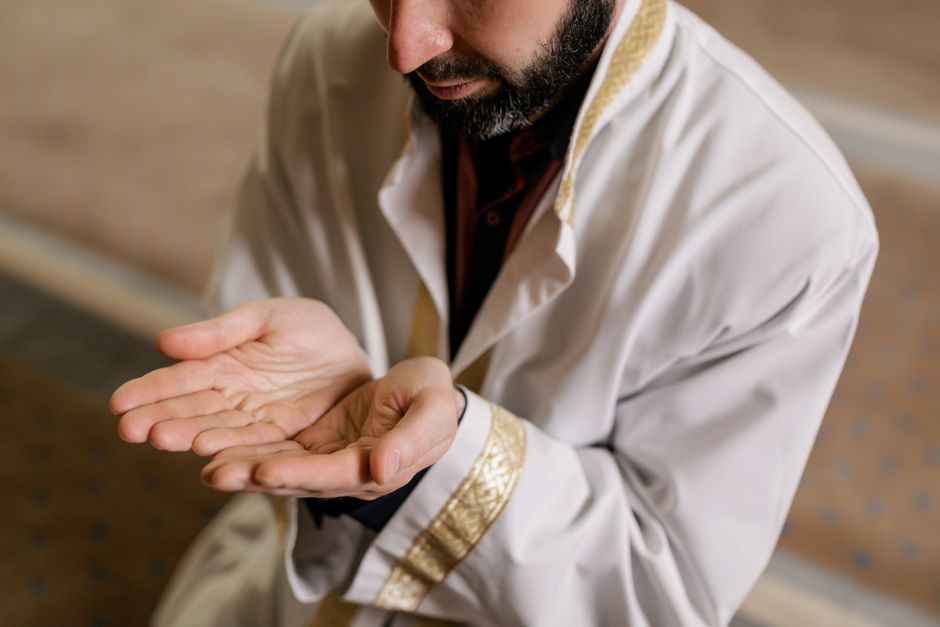
There are moments in life when words feel too small for what the heart is carrying.
A person may smile in front of others, answer messages, go to work, take care of family, and continue with daily responsibilities, yet deep inside there is a silent ache. A worry that keeps returning. A hope that feels far away. A mistake that still hurts. A door that has not opened. A question that has not been answered.
In those moments, Islam gives the believer something deeply beautiful: dua.
Dua is not merely asking Allah for things. It is the language of dependence. It is the soul turning back to its Creator. It is the moment when a servant admits, with humility and honesty, “Ya Allah, I cannot do this without You.”
And that admission is not weakness. It is one of the highest forms of strength.
Dua is not only about changing your situation. Sometimes, it begins by changing the heart that is living through the situation.
Dua Is a Relationship, Not a Transaction
Many people think of dua as a request list. We ask for a job, marriage, healing, money, guidance, children, forgiveness, protection, or peace. These are all valid things to ask for. Allah is generous, and nothing is too big or too small to bring before Him.
Yet dua becomes more powerful when we stop treating it like a transaction.
A transaction says, “I asked, so where is it?”
A relationship says, “I asked because I know You hear me, I trust You, and I need You.”
This difference matters.
When we make dua, we are not speaking into empty space. We are speaking to the One who knows the wound behind the words, the fear behind the silence, and the hope behind the tears. Even when our sentences are messy, even when our thoughts are scattered, even when all we can say is “Ya Allah,” He knows.
Sometimes the most sincere dua is not polished. It is not poetic. It is whispered with a trembling heart in the middle of the night, in the car, on a prayer mat, while washing dishes, while walking alone, or while trying not to cry.
Allah does not require perfect vocabulary. He wants a present heart.
Why Some Duas Feel Unanswered
One of the most painful experiences for a believer is making the same dua again and again while nothing seems to change.
You pray for relief, yet the hardship remains.
You pray for a person to return, yet they stay distant.
You pray for a door to open, yet it stays closed.
You pray for healing, yet the pain continues.
At times, the heart may wonder, “Did Allah hear me?”
The answer is yes.
But being heard does not always mean receiving exactly what we imagined, exactly when we wanted it.
A child may cry for something harmful, and a loving parent may refuse. A patient may ask for sweetness, and a doctor may restrict it for healing. A traveller may want to rush forward, but the road ahead may be dangerous.
We see a small part of our story. Allah sees the whole of it.
Sometimes Allah gives what we ask for. Sometimes He delays it until the timing is better. Sometimes He replaces it with something safer, deeper, or more lasting. Sometimes He protects us from what we thought we needed. Sometimes He uses the waiting itself to soften us, mature us, humble us, and bring us closer to Him.
That does not mean waiting is easy. It can hurt. It can feel lonely. Islam does not ask us to pretend pain is not painful. But it teaches us not to measure Allah’s love by the speed of the answer.
Delay is not denial. Silence is not absence. A closed door is not always punishment.
The Inner State of Effective Dua
Effective dua begins before the words leave the tongue. It begins with the state of the heart.
1. Come to Allah with humility
Humility is not thinking you are worthless. It is recognizing that you are needy before Allah.
Every breath, every heartbeat, every moment of safety, every chance to repent, every blessing we remember and every blessing we overlook comes from Him. When a person makes dua with humility, they stop performing. They stop pretending to be in control. They come as they are.
A humble dua may sound like:
“Ya Allah, I am weak, but You are strong. I am confused, but You know. I am afraid, but You are my Protector. Guide me, forgive me, and do not leave me to myself.”
There is beauty in such honesty.
2. Ask with certainty, not arrogance
Certainty in dua means trusting Allah’s power and mercy. It does not mean demanding a specific outcome as though we know better than Him.
There is a gentle balance here. We ask boldly because Allah is generous. We surrender peacefully because Allah is wise.
Ask for big things. Ask for impossible-looking things. Ask for your heart to be healed, your sins to be forgiven, your family to be guided, your rizq to be blessed, your future to be protected. Never shrink your dua because the situation looks difficult.
What is difficult for creation is not difficult for the Creator.
3. Be present, even if only for a moment
The mind wanders. The heart becomes distracted. We are human.
Still, try to give your dua a few sincere moments of full presence. Slow down. Breathe. Know that you are speaking to Allah. Let your words carry meaning.
A short dua with presence is better than a long dua recited absent-mindedly.
Before asking, praise Allah in your own simple words. Send blessings upon the Prophet ﷺ without needing to overcomplicate it. Admit your need. Ask clearly. Then end with trust.
What Should We Ask For?
Many of us ask Allah for worldly needs, and there is no shame in that. Islam does not teach us to detach from life in a cold or unnatural way. We need provision, companionship, health, safety, success, and ease.
But a mature heart learns to ask for more than outcomes.
Ask Allah for guidance before success.
Ask for barakah before abundance.
Ask for contentment before luxury.
Ask for sincerity before recognition.
Ask for forgiveness before comfort.
Ask for a heart that remains close to Him in both ease and hardship.
Sometimes we ask for the blessing, but forget to ask for the ability to handle the blessing.
A person may ask for wealth, but wealth without gratitude can become a trial. A person may ask for marriage, but marriage without patience can become painful. A person may ask for influence, but influence without humility can damage the soul.
So ask for the thing you want, and ask Allah to make it good for your dunya and akhirah.
Dua and Effort Walk Together
Dua does not mean passivity.
A student should make dua and study. A person seeking work should make dua and apply. Someone struggling with health should make dua and seek treatment. A person wanting a better marriage should make dua and improve their character. Someone seeking forgiveness should make dua and leave the sin.
Dua is not an escape from effort. It gives effort its soul.
When we act without dua, we may become arrogant. When we make dua without effort, we may become careless. The believer joins both: a heart that depends on Allah and hands that keep working.
Tie your camel, then trust Allah.
When Your Heart Feels Too Tired to Make Dua
There are seasons when even dua feels difficult.
You may feel spiritually dry. You may feel ashamed because of sins. You may feel disappointed by life. You may feel unworthy of asking Allah again.
But do not let shame push you away from the One who can forgive you.
The door of dua is not only for the righteous who have everything together. It is also for the broken, the guilty, the exhausted, the confused, and the one who keeps falling but still wants to return.
If all you can say is, “Ya Allah, help me come back to You,” then say that.
If all you can say is, “Ya Allah, I am tired,” then say that.
If tears come before words, let the tears speak.
The heart that still wants to call upon Allah has not been abandoned.
Practical Action Points for Stronger Dua
1. Make dua daily, not only during crisis
Build a habit of speaking to Allah in ease, so your heart knows where to run in hardship.
2. Choose quiet moments
After prayer, before sleep, during the last part of the night, while fasting, while travelling, or anytime your heart feels soft. Do not wait for the perfect moment; begin where you are.
3. Keep a dua list
Write down the things you are asking Allah for: your faith, family, future, forgiveness, health, rizq, character, and akhirah. This helps you make dua with focus.
4. Ask for others
Make dua for your parents, spouse, children, friends, teachers, the sick, the grieving, the oppressed, and the ummah. A heart that prays for others becomes less selfish and more tender.
5. Watch what you consume
A heart filled with envy, gossip, arrogance, and constant distraction becomes heavy. Protect your income, your tongue, your eyes, and your habits. Spiritual clarity affects the quality of dua.
6. Do not rush the answer
Keep asking. Keep trusting. Keep walking. Allah’s timing may be different from your timeline, but His wisdom is never absent.
A Gentle Closing Prayer
Dua is one of the greatest gifts Allah has given us. It allows the weak to speak to the Most Powerful, the sinful to return to the Most Merciful, and the lonely to be heard by the One who never leaves.
May Allah make our hearts sincere when we call upon Him. May He answer our duas in the way that is best for our dunya and akhirah. May He heal what is wounded, guide what is confused, forgive what is hidden, and replace our anxiety with calm trust in Him.
Ya Allah, teach us to ask beautifully, wait patiently, and accept Your decree with hearts full of faith. Ameen.
EmoticonEmoticon